Cruises are supposed to be the easiest, most relaxing vacations you can take—but one mistake can turn your vacation into a nightmare.
From missed ships to surprise bills and preventable emergencies, even seasoned cruisers can make these mistakes.
Below, I’ll go over the biggest cruise mistakes that you need to avoid.

Forgetting Prescription Medications
One of the most common and stressful mistakes is forgetting prescription medications—or packing them in checked luggage where they could get lost.
Always keep your medications in your carry-on or personal bag so they stay with you at all times.
It’s also smart to bring extra, at least an additional week’s supply, in case of delays or unexpected itinerary changes.
Keep in mind that many prescriptions are hard—or sometimes impossible—to refill at foreign ports, especially without a local doctor or proper documentation, so running out can quickly turn into a serious problem.
Assuming There Are Taxis or Ride Shares
Don’t assume every cruise port will have readily available taxis or ride-share services. Some ports are small or remote, and getting transportation back to the ship can be difficult or unreliable.
I’ve seen this happen firsthand—we once took a taxi to Blarney Castle, and when we came out, there were no taxis around.

Uber kept canceling, and we were stuck with no guaranteed ride back to the ship. We came very close to missing the ship, and only managed to get an Uber at the very last minute.
Always plan your return transportation in advance so you’re not stranded and racing against the clock to get back to the ship.
Missing Time Zone Changes
Cruise ships often cross time zones, and if you’re not paying attention, it can completely throw off your schedule.
Always check the ship’s daily planner and listen for announcements so you know when “ship time” changes.
This might sound small, but it can lead to big problems—like missing activities or even the ship itself.
I’ve even seen it happen firsthand: my sister kept showing up late to everything on her Bermuda cruise, totally confused, until she realized the ship had changed time zones and she was an hour off the entire time.
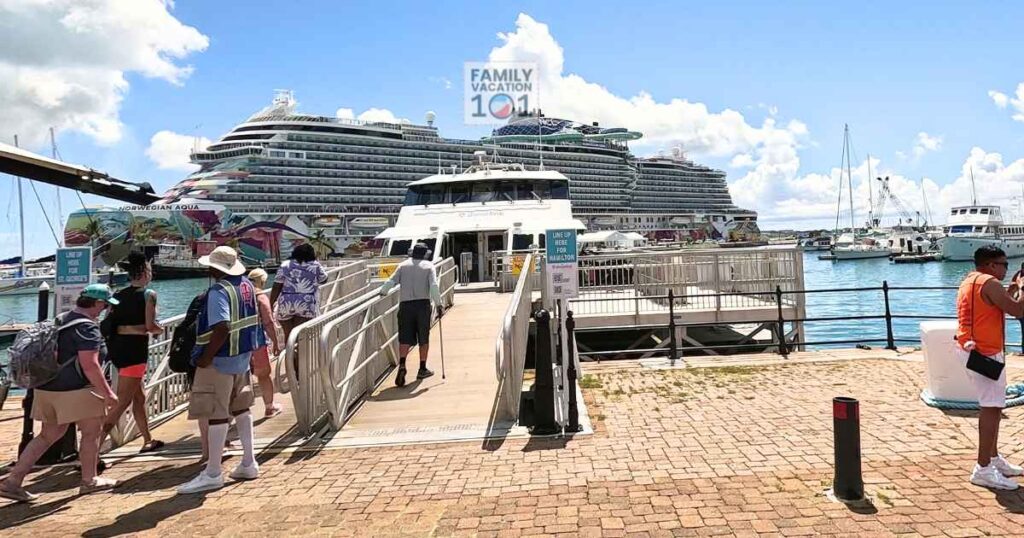
At least she caught the mistake on the first sea day—otherwise, she could’ve easily missed the all-aboard time and been left behind in port.
Not Buying Travel Insurance
Skipping travel insurance might save you a little money upfront—but it can cost you a lot more if something goes wrong. It can save you hundreds or even thousands in medical bills—because even minor issues onboard can get expensive fast.
I’ve seen it firsthand: my son had a simple food allergy reaction on a cruise and ended up with a $500 bill for a doctor’s visit and medication onboard.
Keep in mind that most U.S. health insurance plans don’t cover medical care outside the country, and Medicare typically doesn’t cover international travel at all. Without travel insurance, you’re fully responsible for those costs.
Not Having the Right Visa for Each Port
Before you even step on the ship, double-check the visa requirements for every port on your itinerary.
Having a U.S. passport doesn’t automatically guarantee entry everywhere—and you can be denied boarding if your documents aren’t in order.
The visa application process can take weeks, so don’t leave this to the last minute.
Start researching early so you have enough time to get the proper visas. And don’t assume the cruise line will remind you—this is your responsibility.
Not Checking Your Passport Expiration Date
Make sure your passport is valid for at least six months beyond your cruise dates.
This is known as the “six-month rule,” which means many countries won’t let you enter if your passport is set to expire within six months of travel—even if it’s not technically expired yet.
Cruise lines enforce this rule strictly. You will be denied boarding if you have an expiring passport.
Always check passport expiration dates early, including for children’s passports, since renewals can take time.
Not Paying Attention to the All Aboard Time
Cruise ships are strict about departure times. Before you get off the ship, always note the “all aboard” time so you know exactly when you need to be back.
I recommend taking a picture of the sign posted at the gangway and even set an alarm on your phone as a reminder.
The ship will not wait—even if you’re just a few minutes late. It’s smart to plan to return a few hours early to give yourself a buffer for traffic or unexpected delays.
Booking a Late Shore Excursion
One common mistake cruisers make is booking independent tours that return too close to the ship’s departure time.
It might seem fine in theory, but if that tour runs late due to traffic or other delays, you could miss the all abroad time—and the ship will not wait for you.
A safer option is to book morning or half-day excursions so you have plenty of buffer time.
If you want a full-day tour, I suggest booking through the cruise line, since those shore excursions are designed to guarantee the ship will wait if delays occur. It may cost more, but the peace of mind is worth it.
Not Checking Travel Advisories
Don’t assume every cruise port is safe just because it’s a popular destination.
You might be surprised to learn that some popular cruise ports aren’t as safe as you think and can still have active travel advisories due to crime or other safety risks.
Before heading out on your own, check the U.S. Department of State’s travel advisories so you know what to expect.
For example, the Bahamas is at Level 2, which means “exercise increased caution.”

This information can help you decide whether to explore independently, stick with cruise shore excursions, or stay onboard the ship. Staying informed helps you make safer choices and avoid putting yourself in risky situations while at port.
Not Knowing the Port Agent’s Contact Information
Every port your cruise visits has a designated port agent—and they can be a lifesaver in an emergency.
Their contact information is usually listed on the port map or in the ship’s daily planner, so take a moment to save it in your phone or snap a picture.
If you run into trouble ashore, get delayed, or even miss the ship, the port agent is your main point of contact to help you get back on track or make arrangements to rejoin the cruise.
Forgetting to Put Your Phone on Airplane Mode
Cell phone charges can be very expensive on a cruise. Even if you’re not actively making calls, background apps can quietly use data and trigger costly roaming charges.
As soon as your ship starts to leave port, switch your phone to airplane mode. This simple step can save you from a shocking phone bill when you get home.
Not Having Parental Consent for Traveling with Minors
If you’re traveling with a child who isn’t yours, you’ll need a notarized letter of consent from their parents.
Even single parents may be asked to provide additional documentation when traveling alone with their child, especially on international itineraries.
Requirements can vary, so be sure to check directly with your cruise line ahead of time to confirm exactly what’s needed—this can help you avoid any issues at boarding.
You’ll most likely be asked to bring legal documents like a notarized consent form and the child’s birth certificate.
Flying in on Embarkation Day
Flying in on the same day your cruise departs is a risky move. Flight delays, weather issues, or even traffic can cause you to miss the ship entirely.
The safest option is to arrive at your embarkation port at least a day early.
This not only reduces stress but also gives you time to explore the city, relax, and start your vacation smoothly instead of rushing straight from the airport to the cruise terminal.
Traveling Without a Passport
U.S. citizens can take closed-loop cruises with just a driver’s license—but that doesn’t mean you should. These are cruises that start and end at the same U.S. port, like New York to the Caribbean and back. I
If something goes wrong—like missing the ship or needing to fly home from another country—you’ll need a passport.
Without one, dealing with embassies and emergency travel documents is a bad situation to be in. Always bring your passport. It’s the easiest way to avoid a major travel disaster.
Cruising While Over 23 Weeks Pregnant
Most cruise lines restrict travel for passengers who are over 23 weeks pregnant. If you’re expecting and planning a cruise, make sure to check your cruise line’s specific policy before booking.
These rules are in place for safety reasons, since medical facilities at sea may not be equipped to handle complications from late-term pregnancies.
If you don’t meet the requirements, you could be denied boarding—so it’s important to confirm everything in advance.
Not Checking the Minimum Age Requirement for Infants
Planning to cruise with a baby? Don’t forget to check the cruise line’s minimum age policy before you book.
Most require infants to be at least six months old, but for longer or more remote itineraries—like transatlantic crossings or cruises with multiple days at sea—the minimum age is often 12 months.
If your baby doesn’t meet the requirement, you won’t be allowed to board, so it’s important to know the rules ahead of time.
Cruise Essentials to Buy Before Your Cruise
Family Vacation 101 participates in affiliate programs including the Amazon Associates Program and may earn from qualifying purchases at no extra cost to you.
Travel Must-Haves
Passport neck wallet – Keeps your passport and travel documents secure and accessible. It also has RFID protection.
Cruise lanyards – A super convenient way to keep your cruise card within easy reach. No more digging through your bag every time you need it! I recommend getting one lanyard per person in your group and choosing different colors so it’s easy to tell them apart.
Anti-theft crossbody bag with anti-pickpocket clip – Genius anti-theft clip and versatile enough for both port days and evenings in the dining room.
Anti-theft crossbody bag with RFID – Padded shoulder straps with RFID lining to safeguard against identity theft.
Insulated water bottles –I don’t like spending money on bottled water, and I always want fresh water in my cabin. I’ll fill my bottle at the buffet or ask my server at dinner, then bring it back so I have water at night. This is my go-to water bottle—I prefer ones without straws since they’re much easier to wash in the cabin sink.
Pashmina – This multi-purpose wrap always earns its spot in my luggage. Use it as an evening wrap, a lightweight plane blanket, or a cover-up when visiting places of worship that require modest dress. I never cruise without one—you’ll be surprised how often it comes in handy.
Cruise Planning Essentials
Day Passes to Resorts– Booking private beach resort access in advance guarantees a comfortable beach experience at the cruise port.
Travel Insurance with CFAR Coverage– CFAR travel insurance gives you flexibility to cancel your cruise for any reason and recover part of your costs if plans change.
Last Minute Cruise Deals– Search for last minute cruise deals.
Cabin Comfort & Organization
Non-surge Cruise power strip– Cabins never have enough outlets (check cruise line rules first).
Magnetic hooks – Super-strong magnetic hooks that attach easily to your cabin walls. They’re perfect for hanging hats, cruise lanyards, goggles, swimsuits, and towels. I personally use the 85+ lb hooks—they’re incredibly sturdy and can even hold backpacks!
Small portable fan – Improves airflow and keeps Inside Cabins from feeling stuffy.
Motion sensor night light – Perfect for Inside Cabins, for when you get up at night to use the bathroom. It also has a magnetic base, so you can easily attach it to your cabin walls.
Toiletries & Laundry
Hanging toiletry bag – Keeps your essentials neat and accessible.
Fabric freshener spray – Fights wrinkles and refreshes clothes between wears.
Travel-size detergent – Handy for washing swimsuits, underwear, and quick-dry clothing in the sink.
TSA-approved travel containers – Easy to pack your lotions, creams, and other liquids without worrying about TSA rules.
Health & Wellness
Anti-seasickness medicine – My go-to meds for anti-seasickness. I take one in the morning on sea days (bring chewables for kids).
Acupressure bands – A natural alternative for seasickness relief. I use this with the anti-seasickness meds.
Packing & Storage
Cruise travel planners– Check out my travel planners, they help you stay organized before and during your trip.
Packing cubes – I never travel without packing cubes! They make packing and unpacking so easy—you can simply slip the entire cube into the cabin closet or drawer. I like to assign a different color to each person so there’s no mix-up.
Foldable duffel bag – I always pack a foldable duffel bag in case I bring home too many souvenirs or do some extra shopping. It doubles as an extra carry-on and barely takes up any luggage space.
Foldable shopping bag – Perfect for shopping at cruise ports, these bags fold up small enough to keep in your purse. I always carry one with me—you never know when you’ll need it! Plus, many countries charge a fee for shopping bags, and I’d much rather use my own than pay extra.
Foldable backpack – Perfect for cruise port days when you need an extra bag. I love that these backpacks are lightweight and fold down small, so you can toss one in your luggage without taking up much space.
Travel luggage scale – I always keep one in my suitcase so I can weigh my bags before heading to the airport. It’s a simple way to avoid overweight baggage fees.
Apple AirTags – I pop one into each of my bags so I can track my luggage for peace of mind. They’re especially helpful if you have a short layover and worry about your suitcase getting left behind.
Beach Essentials
Towel Clips – A simple must-have for pool and beach days! They keep your towels from slipping off lounge chairs, and I never cruise without brining a few in my luggage.
Waterproof phone pouch – Protect your phone from water and sand while still being able to snap photos. I always bring one when cruising the Caribbean or Mediterranean—it’s a lifesaver for beach and pool days.
Striped beach bag with zipper – You’ll need a beach bag with zipper to keep your things secure. I like this one because it’s stylish, has a water bottle holder, keeps belongings secure and has a lot of pockets.
Kid-Friendly Cruise Essentials
Magnetic toys – Cabin walls are magnetic, making these toys perfect for fun, mess-free entertainment. They keep kids busy when you’re in the cabin, especially since cruise TV options for kids can be limited. It’s always best to bring your own toys.
Collapsible beach buckets and toys – You’ll definitely want to bring beach toys if you’re going on a Caribbean cruise! This collapsible set includes foldable buckets, shovels, and sandcastle molds, all packed neatly in one bag. They’re easy to fit in your suitcase without taking up much space.
15 Cruise Buffet Mistakes You’ll Regret Making
The cruise buffet is one of the places I spend a surprising amount of time…
14 Cruise Ports Where You Don’t Need a Shore Excursion
Cruise shore excursions can get expensive fast. Depending on the port and the activity, I…

MSC Norway Cruise: 12 Things I Wish I Knew Before Going
If you’re planning an MSC Norway cruise, there are a few things you should know…
11 Things I Never Pay Extra for on a Cruise
I’ve been on more than 25 cruises, and one thing I’ve gotten pretty good at…

10 Easy Ways to Make an Inside Cruise Cabin More Comfortable
Inside cabins are often the least expensive staterooms on a cruise ship, making them a…

Port or Starboard: Which Side of a Cruise Ship is Better?
When booking a balcony or ocean view cabin, you may wonder whether you should stay…
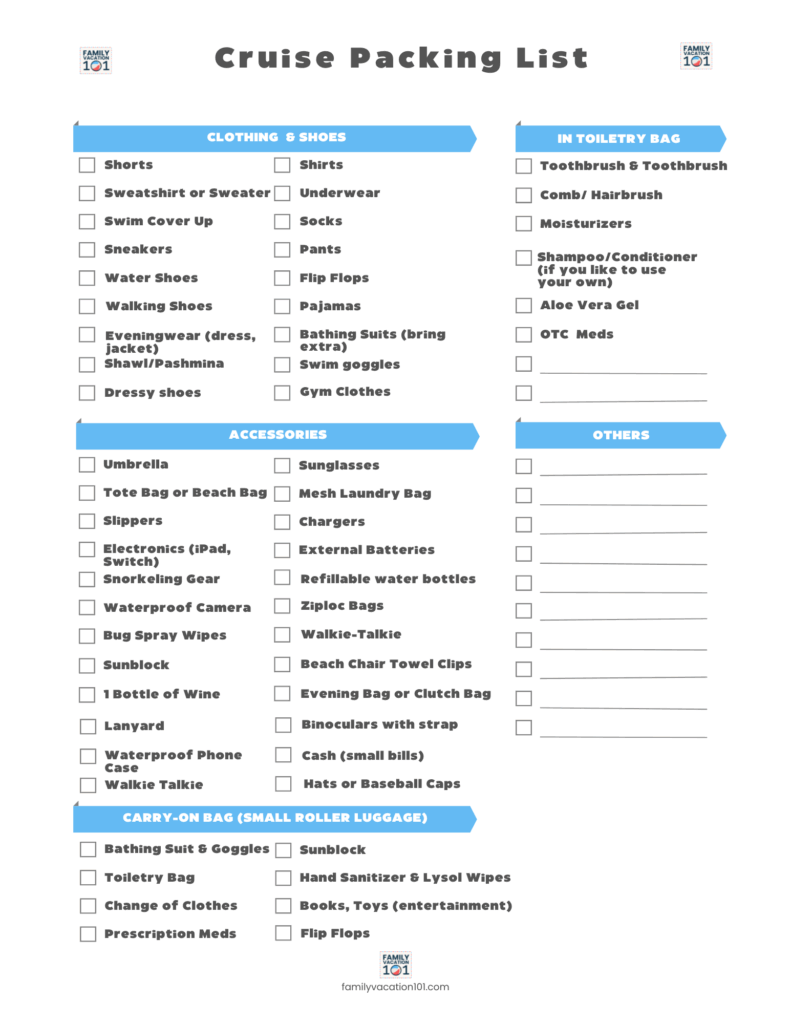
Get Your FREE Cruise Packing List

Sign up once and you will get access to ALL exclusive content on this website. After unlocking the printable, just save the printable image and then print it. Use it to help you pack for your cruise vacation. I hope you like it!
Download my free Cruise Packing List printable.