

If you’re thinking about booking an MSC Mediterranean cruise, you need to read this—because the experience is not the same as cruising MSC in the United States.
I learned that firsthand when I sailed on an MSC Mediterranean cruise aboard MSC World Europa.
From water not being automatically served at dinner, to Americans being such a small minority that MSC literally hosted a party just for us, to onboard credits not meaning what you think they mean—this cruise surprised me in ways I did not expect.
Some of these differences are amazing. Some are frustrating. And some can actually cost you money or unnecessary stress if you don’t know about them ahead of time.
Below, I’m breaking down everything Americans need to know before booking an MSC Mediterranean cruise—what’s different, what to skip, what to take advantage of, and the mistakes I made so you don’t make them.

Americans Are the Minority
First, you need to know that MSC Mediterranean cruises feel very different from MSC cruises in the United States, and the biggest reason is the passenger mix.
When you sail MSC in the Mediterranean, Americans are not the majority. In fact, we’re the minority by a lot.
When I sailed on MSC World Europa in the Mediterranean, I was invited to a special event just for American passengers.
Yes, a party just for Americans! They served us champagne and encouraged us to mingle with one another.
During that event, the MSC US Ambassador explained why they do this. On a ship carrying around 5,000 passengers, there were only about 200 Americans onboard. We are such a small minority that MSC literally hosted a party just for us!
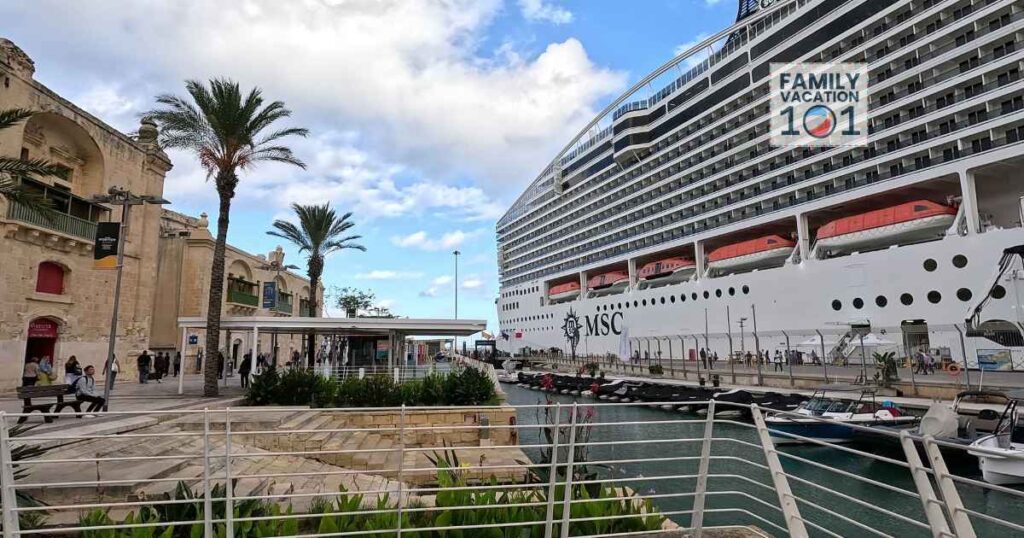
Most of the passengers on MSC Mediterranean cruises are European. You’ll hear Italian, French, Spanish, German, and many other languages everywhere you go. English is spoken, but it’s not the dominant language the way it is on US-based cruises.
Passengers Get On and Off at Every Port
One of the biggest differences on MSC Mediterranean cruises is how embarkation and disembarkation work.
Unlike US cruises where almost everyone gets on and off at the same home port, MSC Mediterranean cruises allow passengers to board and leave the ship at almost every port.
This flexibility exists because the ports are all within the European Union, and it completely changes the flow of the cruise.
Instead of thousands of people boarding or disembarking on the same day, there’s a steady trickle of passengers coming and going throughout the week.
For example, I boarded in Barcelona and also ended my cruise in Barcelona. Embarkation was really easy. There was practically no line at check-in, no crowded terminal, and no stressful waiting.
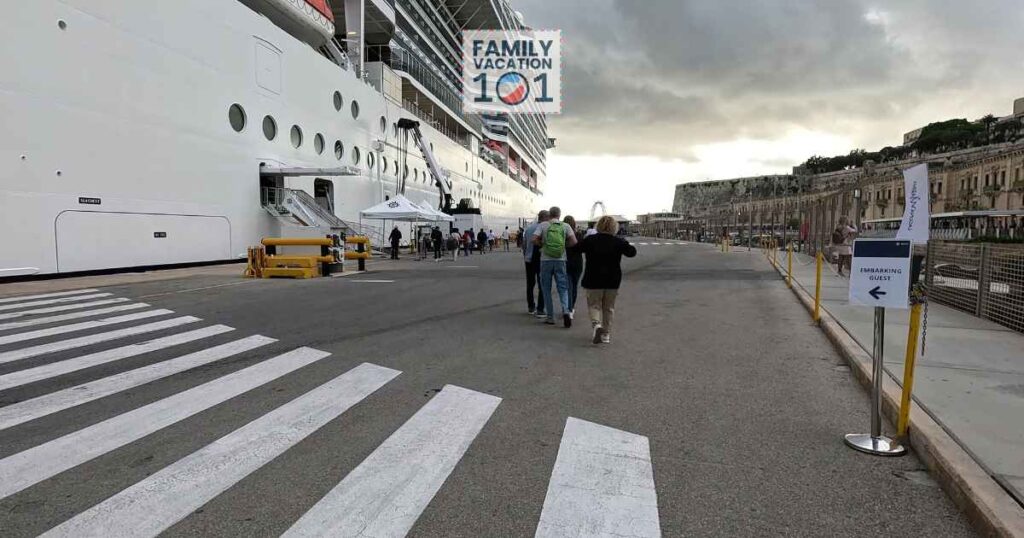
Disembarkation was just as smooth. There wasn’t a mad rush of people trying to get off the ship at the same time.
You’ll notice luggage placed outside cabin doors almost every night because someone is leaving the next morning. You’ll also see crew members running muster drills daily for new passengers who just boarded.
Water Is Not Automatically Served at Meals
One thing I really struggled with on MSC Mediterranean cruises is how water is handled at meals.
If you’re used to cruising in the US, you’re accustomed to sitting down at a table and automatically being served tap water. That’s not how it works here.
MSC follows European dining culture, where complimentary water is not automatically brought to the table. You have to ask for it or you have to buy bottled water.
Getting complimentary water often takes a long time, and you may need to remind your server multiple times.
This can get frustrating, especially when you’re dining in the main dining room and just want water to drink.
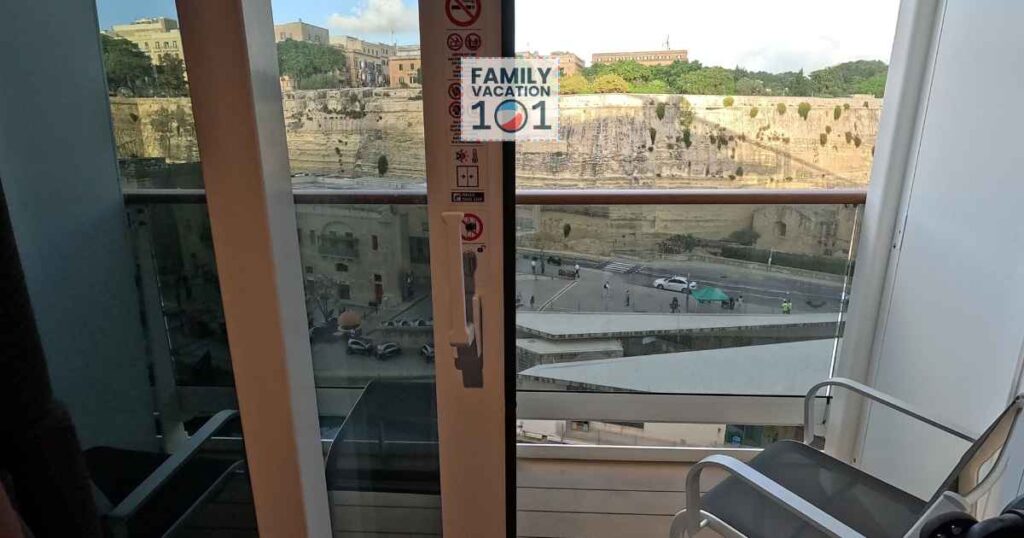
Mineral Water and Coffee Package
MSC is aware that Americans expect complimentary water with their meals, so when Americans book MSC cruises in Europe, a bottled water and coffee package is usually included in the cruise fare.
What this means is that at dinner, you’ll be served bottled still or sparkling water at your table, and you’ll also receive coffee with dessert at no extra charge.
On US cruises, this is something we take for granted because it’s standard for everyone.
On Mediterranean cruises, however, not all passengers receive this benefit.
That said, this package does not apply to breakfast, and lunch can be hit or miss.
At breakfast, juice is offered automatically, but water is not. If you want water, you have to ask for it, and it can take a while to arrive.
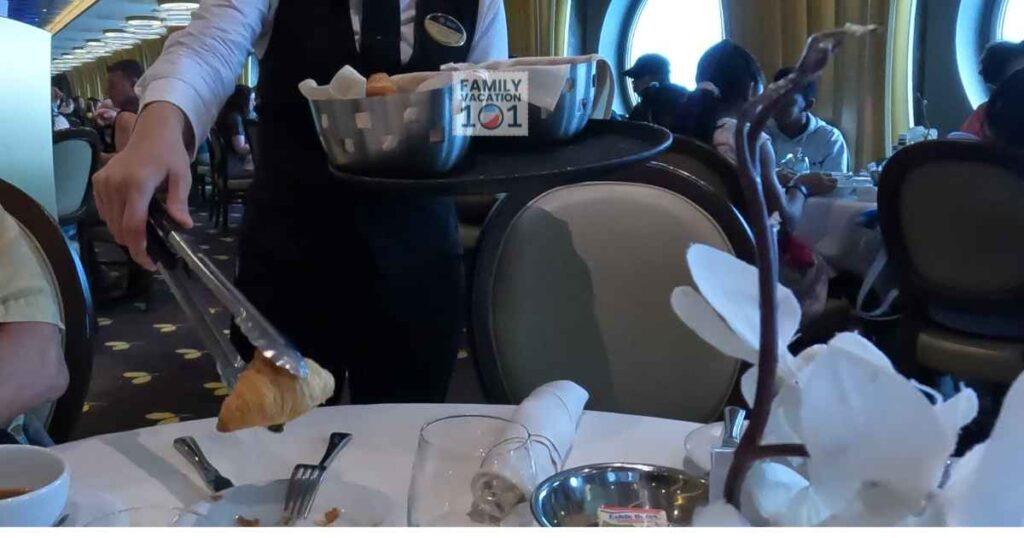
It’s especially frustrating when all you want is water and they keep offering juice instead.
You Don’t Need to Book Shore Excursions at Every Port
A common mistake people make on Mediterranean cruises is booking shore excursions at every single port. The truth is, you don’t really need to.
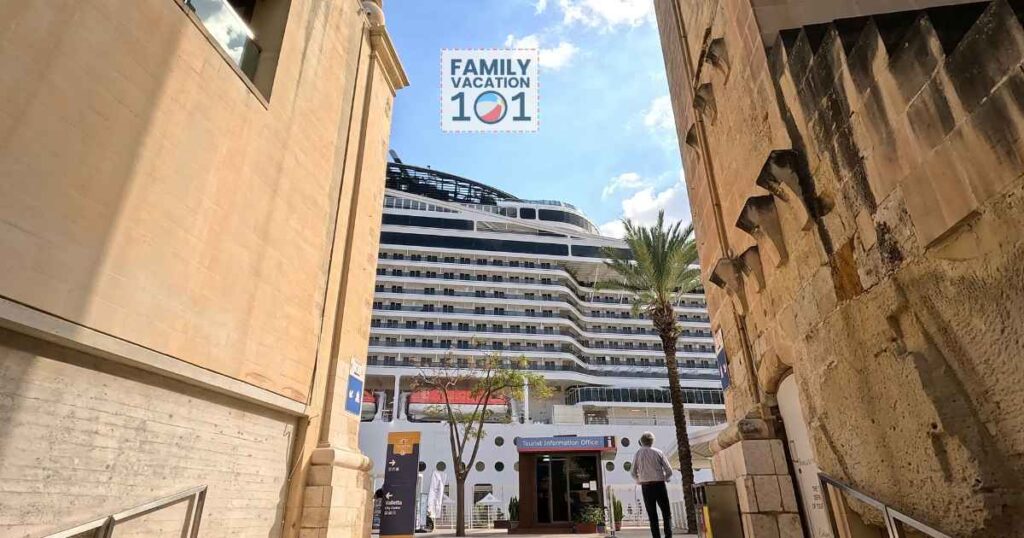
Many Mediterranean ports have hop-on, hop-off buses, and sometimes even hop-on, hop-off trains.
These are much cheaper than cruise shore excursions. And they are very accessible, since most are located right outside the cruise terminal. When you step off the ship, you’ll see them immediately.
You can buy tickets on the spot, hop on the next bus, and explore the city at your own pace.
The buses typically come with headsets that provide commentary in English, which makes it easy to understand what you’re seeing.
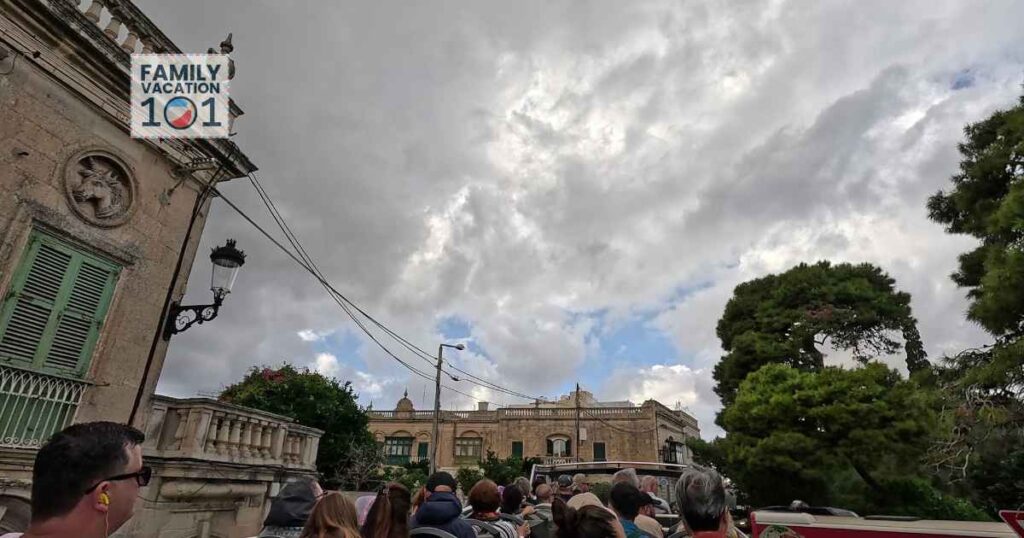
Valletta in Malta has hop-on, hop-off buses, and Messina in Sicily offers both hop-on, hop-off buses and hop-on, hop-off trains.
If you want to explore the city of Naples, take the hop on, hop off bus. That said, if you want to visit places like Pompeii or the Amalfi Coast, those are far from the port, and booking a cruise shore excursion is usually the safer choice.
You May Not Want to Get off the Hop-On, Hop-Off Bus
One important thing to keep in mind with hop-on, hop-off bus tours is that in some smaller Mediterranean ports, the buses don’t run very frequently.
In certain ports, the buses may only come once every hour. That means if you get off the bus, you could be waiting a long time for the next one to pick you up.
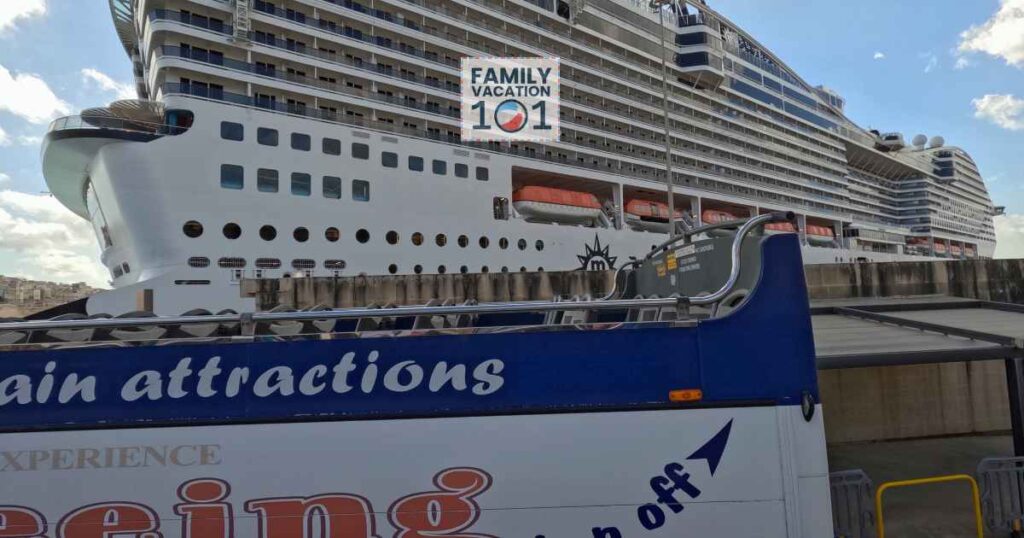
Because of that, there are times when you may actually want to stay on the bus for the entire loop instead of getting off. If you’re not careful with the schedule, you could run out of time and risk missing the ship’s all-aboard time.
For example, in Naples, I didn’t get off the hop-on, hop-off bus at all. I stayed on for the entire loop and just enjoyed the sightseeing from the bus. It was a relaxed way to see the city without worrying about timing.
In Messina, we did get off the bus at the shopping area, but later realized the bus didn’t run all day and stopped operating in the mid-afternoon.
Luckily, the shopping area was within walking distance of the cruise port, so we were able to walk back to the ship. If it hadn’t been, that could have been a much more stressful situation.
You Don’t Need a Beverage Package if the Cruise Is Port Heavy
Most MSC Mediterranean cruises are extremely port heavy. You’ll stop at a new cruise port almost every day, with very few sea days. Because of this, many people don’t spend much time onboard the ship.
If your itinerary is port heavy, I don’t recommend buying the beverage package.
You will be wasting your money because you simply won’t be onboard long enough to drink enough alcohol to justify the cost.
Lots of Wine and Beer Dispensers at the Buffet
Instead of buying a beverage package, buy your drinks à la carte instead. There are wine and beer dispensers throughout the buffet areas.
You just tap your cruise card, pour your drink, and it’s charged to your account. The prices are reasonable, and it’s very convenient.
The Mozzarella Cheese Is to Die For
One thing you should not miss is the mozzarella cheese at the buffet. The mozzarella on MSC Mediterranean cruises is on a completely different level compared to MSC US cruises.
The cheese is made fresh onboard, and you can really taste the difference.
There’s usually a dedicated mozzarella section at the buffet, and it quickly became my favorite area at the buffet. Look for it when you get on the ship!
The Desserts Are Amazing
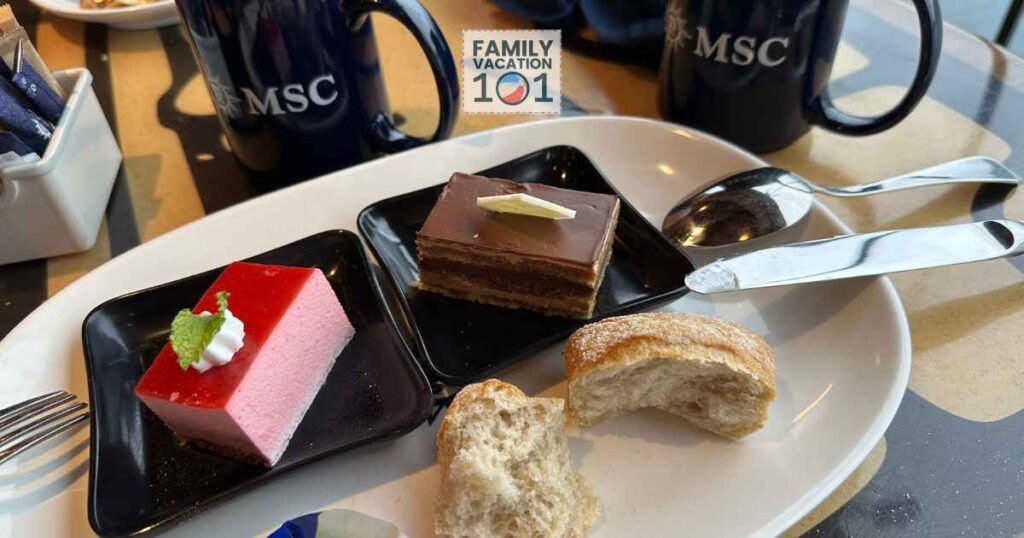
The desserts on MSC Mediterranean cruises deserve special recognition. Whether you’re eating in the buffet or the main dining room, the desserts are consistently excellent.
I don’t know if it’s because we’re in Europe or because MSC hires incredibly talented pastry chefs, but the quality is noticeably higher than what I’ve experienced on many US cruises.
The desserts are not only delicious but also beautifully presented. Don’t skip dessert on these cruises—you’ll regret it.
Caesar Salad and Shrimp Cocktail Are Not Standard
Don’t expect the same American cruise food staples you’re used to. Items like Caesar salad, shrimp cocktail, and French onion soup are not offered daily on MSC Mediterranean cruises.
On my cruise, these items were only available once, during Gala Night. And honestly, the Caesar salad was disappointing. It tasted like bland mayonnaise on lettuce. They simply don’t know how to make Caesar salad the American way!
Juice Is Not Served All Day
Another difference that surprises Americans is how juice is handled. On most MSC US cruises, juice is usually available all day at the buffet. But on MSC Mediterranean cruises, juice is only free at breakfast.
Once breakfast ends, the juice dispensers are shut down during lunch and dinner. If you want juice later in the day, you’ll have to pay for it.
You’ll Get the Equivalent of Your Onboard Credits in Euros
The onboard credit situation on MSC Mediterranean cruises can be confusing, especially for Americans, so this is something you really want to understand before you get on the ship.
When you’re sailing in the Mediterranean, the ship operates in euros, not US dollars.
That means if you’re promised onboard credit in US dollars, the credit will be converted from US dollars to euros.
For example, if you’re told you’re getting $100 in onboard credit, which means you will actually get closer to €85 or €90 instead. Nothing is missing—it’s simply the currency conversion.
What makes this confusing is that onboard credits can come from different sources, and each source is handled differently.
If your onboard credit comes directly from MSC—like future cruise credit—MSC usually honors the face value of that credit regardless of where you’re sailing.
That means if it’s listed as 100, you’ll receive 100 in the ship’s currency. On a US sailing, that would be $100. On a Mediterranean sailing, that would be €100.
In my case, I had a mix of both. I received 100 in onboard credit from MSC as future cruise credit, which showed up as 100 euros on my account.
I also received $75 in onboard credit from my travel agent. Since that credit was issued in US dollars, MSC converted it to 64 euros. So in the end, I had 164 euros to spend onboard instead of the 175 euros I initially thought I had.
At first, I didn’t realize this and even went to guest services to complain, thinking something was wrong.
But the truth is, nothing was wrong at all. I just wished someone had explained how onboard credit works on European cruises so I wouldn’t have been caught off guard.
Do the MSC Status Match
If this is your first MSC cruise, make sure you complete the MSC status match before you sail.
MSC will match your membership level from other cruise lines and hotel loyalty programs.
I used my Celebrity Cruises Captain’s Club level and was matched to MSC Gold Voyagers Club.
As a Gold member, I received perks like a free one-hour thermal spa access, discounts in the gift shop, and invitation to a VIP party with free champagne.
You can read more about how to do the MSC status match and what mistakes to avoid, so make sure to read it before you apply.
Cruise Essentials to Buy Before Your Cruise
Family Vacation 101 participates in affiliate programs including the Amazon Associates Program and may earn from qualifying purchases at no extra cost to you.
Travel Must-Haves
Passport neck wallet – Keeps your passport and travel documents secure and accessible. It also has RFID protection.
Cruise lanyards – A super convenient way to keep your cruise card within easy reach. No more digging through your bag every time you need it! I recommend getting one lanyard per person in your group and choosing different colors so it’s easy to tell them apart.
Anti-theft crossbody bag with anti-pickpocket clip – Genius anti-theft clip and versatile enough for both port days and evenings in the dining room.
Anti-theft crossbody bag with RFID – Padded shoulder straps with RFID lining to safeguard against identity theft.
Insulated water bottles –I don’t like spending money on bottled water, and I always want fresh water in my cabin. I’ll fill my bottle at the buffet or ask my server at dinner, then bring it back so I have water at night. This is my go-to water bottle—I prefer ones without straws since they’re much easier to wash in the cabin sink.
Pashmina – This multi-purpose wrap always earns its spot in my luggage. Use it as an evening wrap, a lightweight plane blanket, or a cover-up when visiting places of worship that require modest dress. I never cruise without one—you’ll be surprised how often it comes in handy.
Cruise Planning Essentials
Day Passes to Resorts– Booking private beach resort access in advance guarantees a comfortable beach experience at the cruise port.
Travel Insurance with CFAR Coverage– CFAR travel insurance gives you flexibility to cancel your cruise for any reason and recover part of your costs if plans change.
Last Minute Cruise Deals– Search for last minute cruise deals.
Cabin Comfort & Organization
Non-surge Cruise power strip– Cabins never have enough outlets (check cruise line rules first).
Magnetic hooks – Super-strong magnetic hooks that attach easily to your cabin walls. They’re perfect for hanging hats, cruise lanyards, goggles, swimsuits, and towels. I personally use the 85+ lb hooks—they’re incredibly sturdy and can even hold backpacks!
Small portable fan – Improves airflow and keeps Inside Cabins from feeling stuffy.
Motion sensor night light – Perfect for Inside Cabins, for when you get up at night to use the bathroom. It also has a magnetic base, so you can easily attach it to your cabin walls.
Toiletries & Laundry
Hanging toiletry bag – Keeps your essentials neat and accessible.
Fabric freshener spray – Fights wrinkles and refreshes clothes between wears.
Travel-size detergent – Handy for washing swimsuits, underwear, and quick-dry clothing in the sink.
TSA-approved travel containers – Easy to pack your lotions, creams, and other liquids without worrying about TSA rules.
Health & Wellness
Anti-seasickness medicine – My go-to meds for anti-seasickness. I take one in the morning on sea days (bring chewables for kids).
Acupressure bands – A natural alternative for seasickness relief. I use this with the anti-seasickness meds.
Packing & Storage
Cruise travel planners– Check out my travel planners, they help you stay organized before and during your trip.
Packing cubes – I never travel without packing cubes! They make packing and unpacking so easy—you can simply slip the entire cube into the cabin closet or drawer. I like to assign a different color to each person so there’s no mix-up.
Foldable duffel bag – I always pack a foldable duffel bag in case I bring home too many souvenirs or do some extra shopping. It doubles as an extra carry-on and barely takes up any luggage space.
Foldable shopping bag – Perfect for shopping at cruise ports, these bags fold up small enough to keep in your purse. I always carry one with me—you never know when you’ll need it! Plus, many countries charge a fee for shopping bags, and I’d much rather use my own than pay extra.
Foldable backpack – Perfect for cruise port days when you need an extra bag. I love that these backpacks are lightweight and fold down small, so you can toss one in your luggage without taking up much space.
Travel luggage scale – I always keep one in my suitcase so I can weigh my bags before heading to the airport. It’s a simple way to avoid overweight baggage fees.
Apple AirTags – I pop one into each of my bags so I can track my luggage for peace of mind. They’re especially helpful if you have a short layover and worry about your suitcase getting left behind.
Beach Essentials
Towel Clips – A simple must-have for pool and beach days! They keep your towels from slipping off lounge chairs, and I never cruise without brining a few in my luggage.
Waterproof phone pouch – Protect your phone from water and sand while still being able to snap photos. I always bring one when cruising the Caribbean or Mediterranean—it’s a lifesaver for beach and pool days.
Striped beach bag with zipper – You’ll need a beach bag with zipper to keep your things secure. I like this one because it’s stylish, has a water bottle holder, keeps belongings secure and has a lot of pockets.
Kid-Friendly Cruise Essentials
Magnetic toys – Cabin walls are magnetic, making these toys perfect for fun, mess-free entertainment. They keep kids busy when you’re in the cabin, especially since cruise TV options for kids can be limited. It’s always best to bring your own toys.
Collapsible beach buckets and toys – You’ll definitely want to bring beach toys if you’re going on a Caribbean cruise! This collapsible set includes foldable buckets, shovels, and sandcastle molds, all packed neatly in one bag. They’re easy to fit in your suitcase without taking up much space.
10 Ways People Waste Money on MSC Cruises
MSC Cruises can be a great bargain compared with other major cruise lines. But what…
13 Cruise Dining Mistakes You’ll Regret Making
Cruise food is one of the main reasons why I keep cruising. But it’s easy…
15 Cruise Buffet Mistakes You’ll Regret Making
The cruise buffet is one of the places I spend a surprising amount of time…
14 Cruise Ports Where You Don’t Need a Shore Excursion
Cruise shore excursions can get expensive fast. Depending on the port and the activity, I…

MSC Norway Cruise: 12 Things I Wish I Knew Before Going
If you’re planning an MSC Norway cruise, there are a few things you should know…
11 Things I Never Pay Extra for on a Cruise
I’ve been on more than 25 cruises, and one thing I’ve gotten pretty good at…