

Exploring a new destination is one of the best parts of a cruise, but a relaxing day ashore can quickly go wrong if you lose your valuables, cannot find transportation or return to the pier too late.
After taking more than 25 cruises, I’ve learned that a little preparation can prevent many common problems in port.

Whether you are booking an excursion or exploring independently, follow these cruise port safety tips to protect yourself—and make sure you return to the ship on time.
Family Vacation 101 participates in affiliate programs including Amazon Associates Program and may earn from qualifying purchases.
Save the Port Agent’s Information
Before leaving the ship, find the contact information for the cruise line’s local port agent.
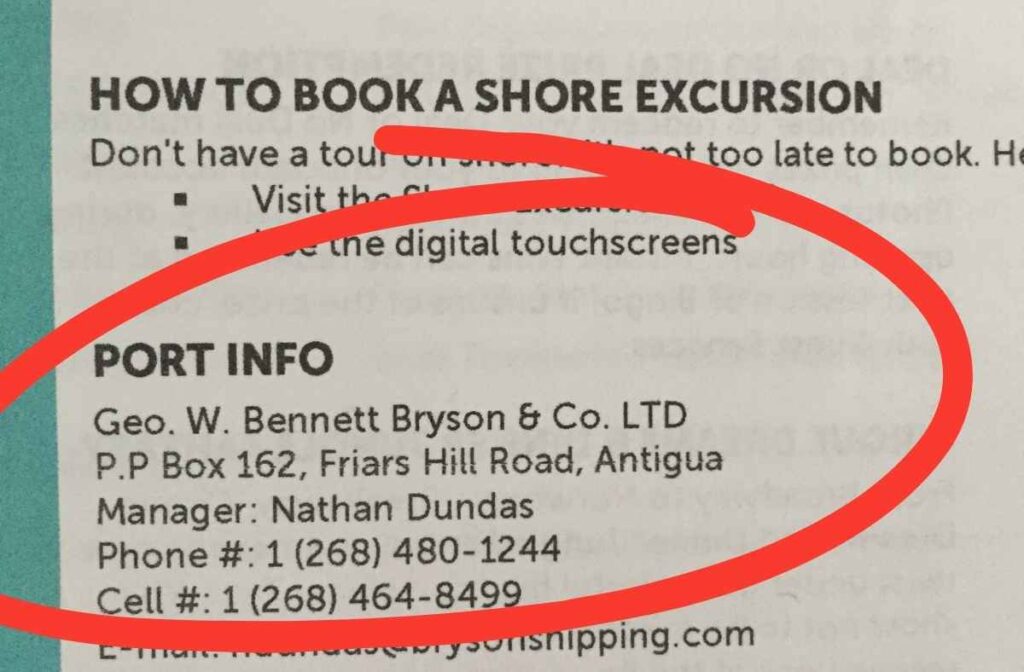
The port agent represents the cruise line at the destination and may be able to assist if you have an emergency, lose your travel documents or miss the ship.
You can usually find the port agent’s phone number and address in the cruise line’s daily planner, port guide or app.
If you cannot locate it, ask a crew member before disembarking.
Take a photo or screenshot of the information so you can access it without Wi-Fi or cellular service.
It is also smart to write the number on paper in case your phone is lost, stolen or damaged.

Find Out Which Identification You Need
Do not automatically assume that your cruise card is the only identification you will need ashore.
Requirements vary by destination, itinerary and cruise line.
Some ports require passengers to carry a passport, while others recommend leaving the original passport secured in the cabin safe and taking a government-issued photo ID and a photocopy or digital copy of the passport instead.
Check the official instructions in your cruise planner or ask the crew before getting off the ship. If the cruise line tells passengers to carry their passports in a particular port, follow that guidance.
Even when your passport stays onboard, keep a secure photo of the identification page on your phone and in cloud storage. I
f you miss the ship and need to travel to the next destination, having your passport information available can make the situation easier to resolve.
Passengers on a U.S. itinerary should also bring an accepted government-issued ID when directed by the cruise line.
Research Transportation Before Arriving
Transportation can vary dramatically from one cruise port to another. A major city may have plenty of taxis, trains and ride-share drivers, while a smaller destination may have only a handful of vehicles available.

Before your cruise, research:
- Whether Uber, Lyft or another ride-share service operates at the port
- If local taxis accept credit cards
- Where the official taxi stand is located
- How long it takes to reach the attraction you want to visit
- Whether public transportation is reliable
- How you will return to the ship
The cruise line’s port talk and shore excursion desk can also provide helpful information.
If transportation is limited or unreliable, booking an organized excursion may be safer than trying to explore independently.
Arrange Your Return Transportation
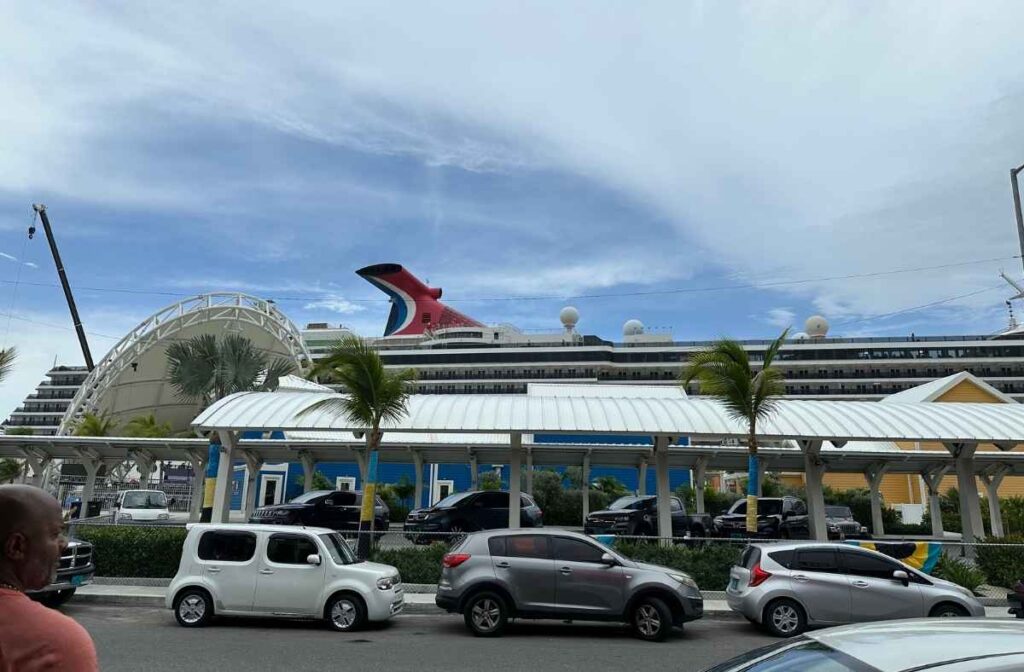
Getting a ride away from the port is often easier than finding one back. Do not begin your day without knowing how you will return to the ship.
I learned this during a British Isles cruise when we docked in Cobh, Ireland.
We took a taxi to Blarney Castle because it cost less than booking an excursion. However, when we were ready to leave, there were no taxis waiting outside.

We tried to request an Uber, but multiple drivers canceled because there were so few available in the area.
We eventually found a ride and returned before departure, but it was much more stressful than it needed to be.
Looking back, we should have arranged a return time with our original taxi driver or booked transportation in advance.
If you are traveling beyond the immediate port area, ask the driver to return at a specific time, reserve a round-trip transfer or use a reputable tour operator.
You can compare independent excursions and transportation options through Viator.
Carry Some Local Currency
Credit cards are widely accepted in many cruise destinations, but you should not rely on them exclusively.
Bring a modest amount of local currency for taxis, tips, public restrooms, small purchases and emergencies.
Some drivers accept only cash, and they may not take U.S. dollars.

We encountered this problem in Stockholm when we needed a taxi back to the ship. We did not have Swedish kronor, and the taxi drivers we approached would not accept our credit cards.
Fortunately, Uber was available, allowing us to request a ride and pay through the app.
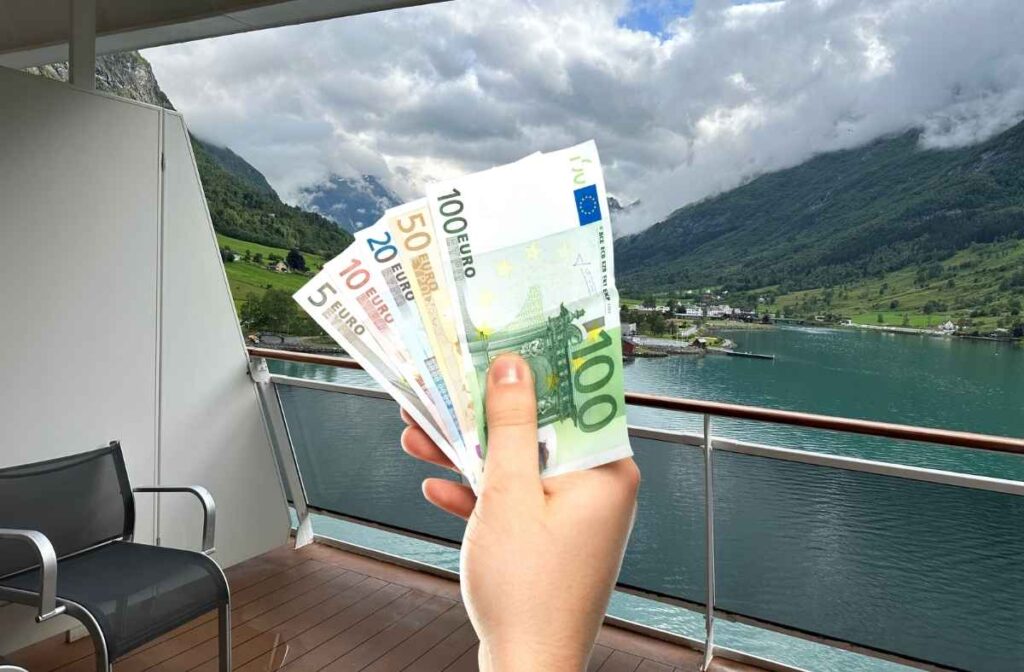
Check the local currency and common payment methods before your cruise. Avoid carrying a large amount of cash, and divide what you bring between two secure places.
Review Current Travel Advisories
A destination’s safety situation can change, so research every scheduled port before sailing.
Check the latest travel advisories from the U.S. Department of State, along with any destination notices provided by your cruise line. Pay attention to information about crime, demonstrations, transportation disruptions, water safety and areas visitors should avoid.

A Level 2 advisory does not necessarily mean you should stay on the ship, but it does mean you should exercise increased caution.
If a destination has a Level 3 advisory or there are serious local safety concerns, consider staying onboard or taking a cruise-sponsored excursion instead of exploring alone.
An organized excursion does not eliminate every risk, but it can reduce the uncertainty of navigating an unfamiliar destination by yourself.
Protect Yourself From Pickpockets
Crowded tourist areas, public transportation stations and popular attractions can attract pickpockets.
Carry your bag in front of your body and keep it closed. Avoid placing a wallet or phone in an open pocket.
A crossbody or sling bag can be more secure than a backpack because it is easier to keep within sight.
I like this anti-theft crossbody bag because it has slash-resistant materials and an RFID-blocking compartment. This anti-theft messenger bag is another option.
No bag is completely theft-proof, so remain aware of your surroundings and avoid displaying large amounts of cash.
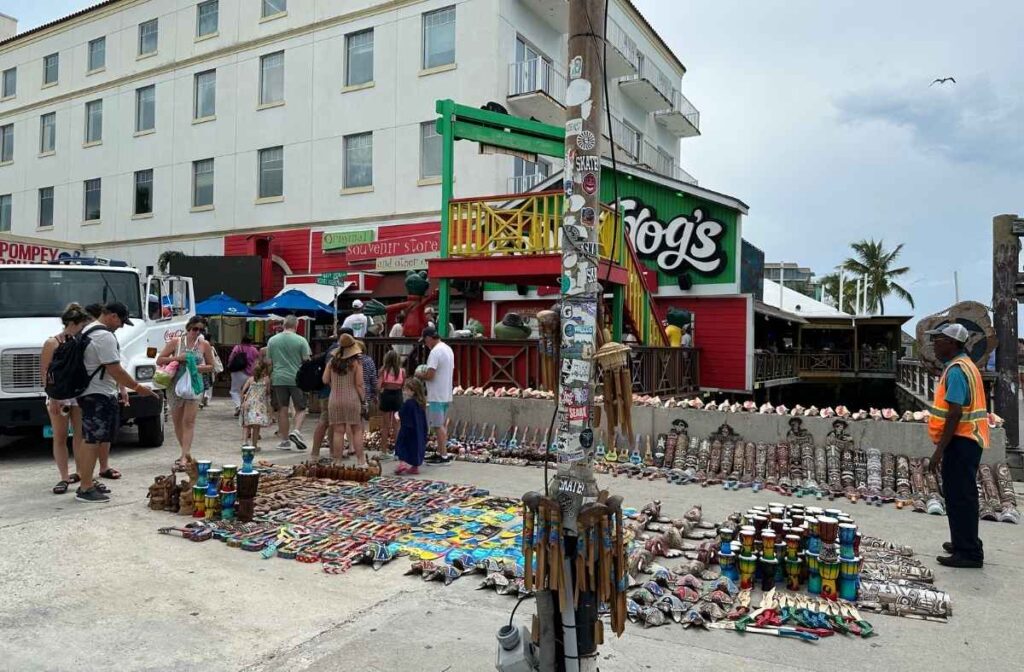
Never Leave Valuables Unattended at the Beach
Leaving your phone, wallet or tablet on a beach chair while you swim makes it easy for someone to take it.
If everyone in your group wants to enter the water, place essential items in a waterproof phone pouch or waterproof waist pack and bring them with you.
This waterproof phone case can hold a phone, while a larger waterproof waist pack provides room for additional belongings.
Items that cannot go into the water should be stored out of sight in a closed beach bag.
I like this zippered waterproof beach bag, although one person should still remain with the belongings whenever possible.
Only bring what you truly need. Expensive electronics and unnecessary valuables are safer in your cabin.

Put Away Your Cruise Lanyard
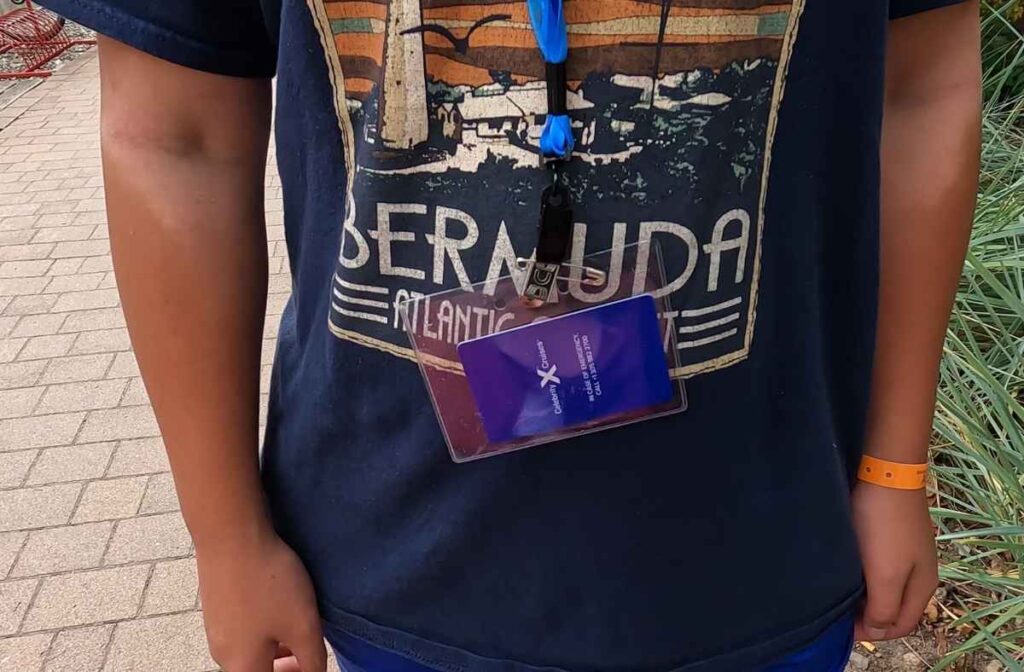
A cruise lanyard makes your keycard convenient to use onboard, but you do not need to advertise that you are a cruise passenger while walking around port.
Wearing a visible cruise lanyard may make you stand out as a tourist. Put it inside your purse or secure crossbody bag until you are ready to return to the ship.
You should also avoid carrying cruise line shopping bags or displaying port maps in crowded areas when you do not need them.
Confirm the All-Aboard Time
The ship’s departure time and all-aboard time are not the same. Passengers are generally required to be back onboard before the scheduled departure.
Check the all-aboard time as you leave the ship. It may be shown in the cruise planner, the cruise line’s app and on a sign near the gangway.
I recommend taking a photo of the sign and setting at least two alarms on your phone. Plan to return well before the deadline rather than treating the all-aboard time as your target arrival time.

If the port requires a tender, find out when the final tender departs. You may also need to allow time for a line at the tender dock.
Cruise ships do not normally wait for passengers exploring independently. If you miss the ship, you could be responsible for hotels, transportation and travel arrangements to meet it at another port.
Be Careful When Booking Independent Excursions
Independent excursions can be less expensive and more personalized than tours sold by the cruise line, but timing is critical.

Choose an early tour that is scheduled to finish several hours before the ship’s all-aboard time.
That buffer gives you extra time if the tour runs late, traffic becomes congested or your vehicle has a problem.
Before booking, confirm that the operator regularly serves cruise passengers and understands the difference between the ship’s time and local time.
Read recent reviews and ask what the company will do if a delay causes you to miss the ship.

If the excursion travels far from the port or ends close to all-aboard time, I would book through the cruise line instead. When a cruise-sponsored excursion is delayed, the cruise line can track the group and will generally wait when possible or help coordinate the next steps.
Passengers on independent tours usually do not receive that same level of assistance.
Prearrange Transportation for Large Groups
Finding one taxi for two passengers may be easy. Finding a van or several taxis for a large family can be much more difficult.
If you are traveling with a group, reserve transportation before arriving.
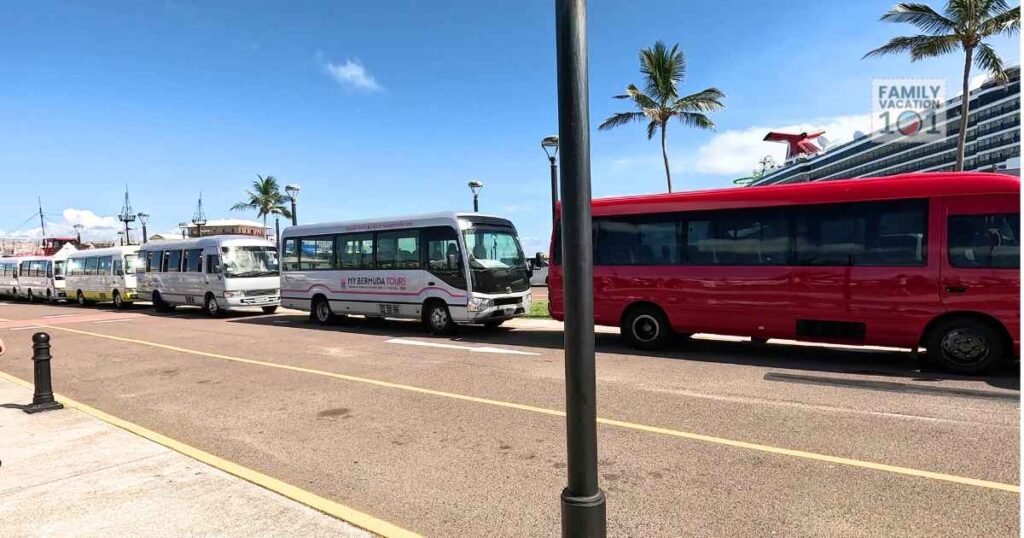
Otherwise, you could spend a large portion of your port day searching for enough vehicles—or struggle to find enough rides back to the ship.
Compare the price of individual excursion tickets with the cost of a private tour.
Depending on the group’s size, a private vehicle and guide may cost the same or even less per person.
Private tours also allow your group to choose the itinerary, move at its own pace and avoid waiting for a bus filled with other passengers. You can browse private and small-group options on Viator.
Limit Alcohol While in Port
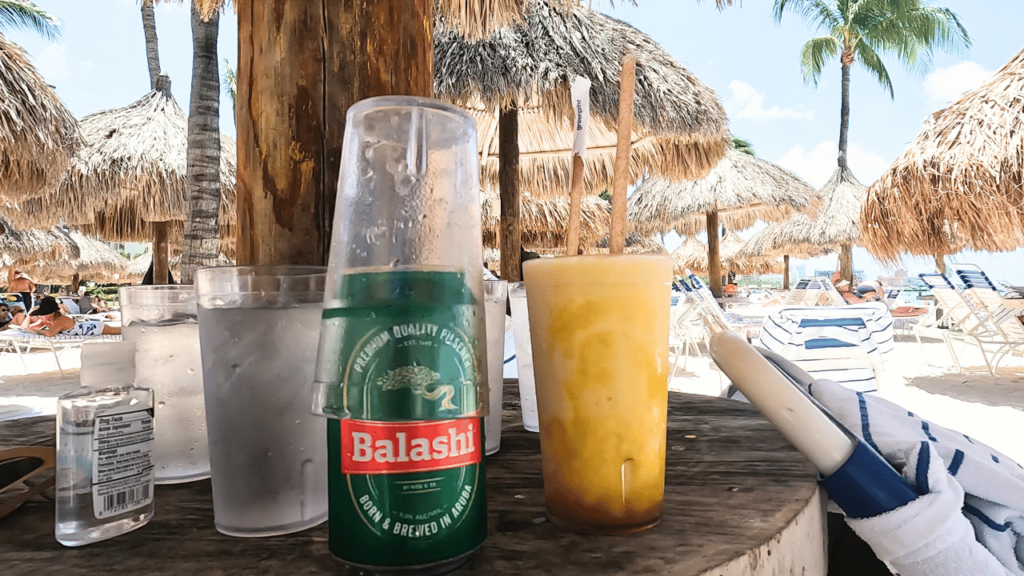
It is easy to lose track of time while drinking at a beach club, bar or party boat. Alcohol, hot weather and strong sun can also increase the risk of dehydration and poor decision-making.
Drink water throughout the day, eat before consuming alcohol and know your limits.
Make sure at least one person in your group remains aware of the time and your return transportation.
You do not want to become disoriented in an unfamiliar destination—or be the passenger running down the pier as the ship prepares to leave.
Leave Expensive Accessories on the Ship
Designer handbags, luxury watches and expensive jewelry can draw unwanted attention.
There is no reason to bring valuable items on a routine port day.
Wear inexpensive accessories and carry a simple, secure bag. If you must bring a valuable item, keep it concealed and never place it on a restaurant table, beach chair or tour bus seat.
The less attention you attract, the less likely you are to be viewed as an easy target.
Verify Whether the Ship’s Time Changes
One of the easiest ways to miss a cruise ship is to follow the wrong time.
Depending on the itinerary, the ship may adjust its clocks to match local time—or remain on a different time zone. Never guess.

Look for time-change announcements in the daily planner, cruise line app or messages delivered to your cabin.
Before leaving the ship, confirm the correct time with a crew member and make sure your phone and watch match the time the ship is using.
Do not rely solely on your phone to update automatically.
Cellular service can be inconsistent, and devices sometimes connect to the wrong network near borders or islands.
Even a one-hour mistake can be enough to miss the final tender or the ship itself.
18 Ways to Save Money on MSC Cruises (Cruise Tips that Work)
With inflation making everything more expensive, I am always looking for ways to save money….
15 Cruise Cabin Organization Tips for Families With Kids
I love cruising, but sharing a small cabin with kids can get crowded fast. Between…
Norwegian Cruise vs. MSC Cruise: 10 Differences to Know
Norwegian Cruise Line or MSC Cruises? I’ve sailed on both, and some of the differences…

10 Cruise Mistakes that Waste Your Vacation Time
The last thing you want to do on a cruise is spend your vacation waiting…

10 Ways People Waste Money on MSC Cruises
MSC Cruises can be a great bargain compared with other major cruise lines. But what…

13 Cruise Dining Mistakes You’ll Regret Making
Cruise food is one of the main reasons why I keep cruising. But it’s easy…
Cruise Essentials to Buy Before Your Cruise
Family Vacation 101 participates in affiliate programs including the Amazon Associates Program and may earn from qualifying purchases at no extra cost to you.
Travel Must-Haves
Passport neck wallet – Keeps your passport and travel documents secure and accessible. It also has RFID protection.
Cruise lanyards – A super convenient way to keep your cruise card within easy reach. No more digging through your bag every time you need it! I recommend getting one lanyard per person in your group and choosing different colors so it’s easy to tell them apart.
Anti-theft crossbody bag with anti-pickpocket clip – Genius anti-theft clip and versatile enough for both port days and evenings in the dining room.
Anti-theft crossbody bag with RFID – Padded shoulder straps with RFID lining to safeguard against identity theft.
Insulated water bottles –I don’t like spending money on bottled water, and I always want fresh water in my cabin. I’ll fill my bottle at the buffet or ask my server at dinner, then bring it back so I have water at night. This is my go-to water bottle—I prefer ones without straws since they’re much easier to wash in the cabin sink.
Pashmina – This multi-purpose wrap always earns its spot in my luggage. Use it as an evening wrap, a lightweight plane blanket, or a cover-up when visiting places of worship that require modest dress. I never cruise without one—you’ll be surprised how often it comes in handy.
Cruise Planning Essentials
Day Passes to Resorts– Booking private beach resort access in advance guarantees a comfortable beach experience at the cruise port.
Travel Insurance with CFAR Coverage– CFAR travel insurance gives you flexibility to cancel your cruise for any reason and recover part of your costs if plans change.
Last Minute Cruise Deals– Search for last minute cruise deals.
Cabin Comfort & Organization
Non-surge Cruise power strip– Cabins never have enough outlets (check cruise line rules first).
Magnetic hooks – Super-strong magnetic hooks that attach easily to your cabin walls. They’re perfect for hanging hats, cruise lanyards, goggles, swimsuits, and towels. I personally use the 85+ lb hooks—they’re incredibly sturdy and can even hold backpacks!
Small portable fan – Improves airflow and keeps Inside Cabins from feeling stuffy.
Motion sensor night light – Perfect for Inside Cabins, for when you get up at night to use the bathroom. It also has a magnetic base, so you can easily attach it to your cabin walls.
Toiletries & Laundry
Hanging toiletry bag – Keeps your essentials neat and accessible.
Fabric freshener spray – Fights wrinkles and refreshes clothes between wears.
Travel-size detergent – Handy for washing swimsuits, underwear, and quick-dry clothing in the sink.
TSA-approved travel containers – Easy to pack your lotions, creams, and other liquids without worrying about TSA rules.
Health & Wellness
Anti-seasickness medicine – My go-to meds for anti-seasickness. I take one in the morning on sea days (bring chewables for kids).
Acupressure bands – A natural alternative for seasickness relief. I use this with the anti-seasickness meds.
Packing & Storage
Cruise travel planners– Check out my travel planners, they help you stay organized before and during your trip.
Packing cubes – I never travel without packing cubes! They make packing and unpacking so easy—you can simply slip the entire cube into the cabin closet or drawer. I like to assign a different color to each person so there’s no mix-up.
Foldable duffel bag – I always pack a foldable duffel bag in case I bring home too many souvenirs or do some extra shopping. It doubles as an extra carry-on and barely takes up any luggage space.
Foldable shopping bag – Perfect for shopping at cruise ports, these bags fold up small enough to keep in your purse. I always carry one with me—you never know when you’ll need it! Plus, many countries charge a fee for shopping bags, and I’d much rather use my own than pay extra.
Foldable backpack – Perfect for cruise port days when you need an extra bag. I love that these backpacks are lightweight and fold down small, so you can toss one in your luggage without taking up much space.
Travel luggage scale – I always keep one in my suitcase so I can weigh my bags before heading to the airport. It’s a simple way to avoid overweight baggage fees.
Apple AirTags – I pop one into each of my bags so I can track my luggage for peace of mind. They’re especially helpful if you have a short layover and worry about your suitcase getting left behind.
Beach Essentials
Towel Clips – A simple must-have for pool and beach days! They keep your towels from slipping off lounge chairs, and I never cruise without brining a few in my luggage.
Waterproof phone pouch – Protect your phone from water and sand while still being able to snap photos. I always bring one when cruising the Caribbean or Mediterranean—it’s a lifesaver for beach and pool days.
Striped beach bag with zipper – You’ll need a beach bag with zipper to keep your things secure. I like this one because it’s stylish, has a water bottle holder, keeps belongings secure and has a lot of pockets.
Kid-Friendly Cruise Essentials
Magnetic toys – Cabin walls are magnetic, making these toys perfect for fun, mess-free entertainment. They keep kids busy when you’re in the cabin, especially since cruise TV options for kids can be limited. It’s always best to bring your own toys.
Collapsible beach buckets and toys – You’ll definitely want to bring beach toys if you’re going on a Caribbean cruise! This collapsible set includes foldable buckets, shovels, and sandcastle molds, all packed neatly in one bag. They’re easy to fit in your suitcase without taking up much space.